Trying to choose between a newer neighbourhood and an established street in Courtenay? That decision can shape how you live day to day, from how often you can walk to errands to how much change you may see around you over time. If you are weighing lifestyle, setting, and long-term fit, this guide will help you compare the two with more confidence. Let’s dive in.
How Courtenay Is Growing
Courtenay’s Official Community Plan supports a mix of housing options, walkable complete neighbourhoods, and tree protection and management across the city. That matters because it helps explain why different parts of Courtenay can feel so different from each other.
In the downtown area, city planning puts a strong focus on a connected, compact core with a pedestrian-first approach. City materials describe downtown as a place that should support shopping, living, working, playing, and learning within one walkable area.
The city is also planning for more cycling infrastructure over the next 20 years, and BC Transit serves the Comox Valley with multiple routes and upgraded or new exchanges in places including South Courtenay, downtown Courtenay, North Island College, downtown Comox, and Oyster River. In practical terms, mobility is improving citywide, but some areas already have a head start when it comes to walking access.
What Established Streets Often Offer
In Courtenay, Old Orchard and Terminal Addition are two of the clearest examples of older residential areas with established character. The Official Community Plan notes that Terminal Addition was established in 1912 and says both areas retain heritage character.
Planning policies in these areas support heritage-style single-detached homes and discourage lot consolidation in transition areas near downtown. The result is a pattern that tends to feel more fine-grained and less uniform than a newer subdivision.
These established streets are also where you are more likely to notice mature trees and older landscaping. City planning language specifically emphasizes preserving heritage designs, landscapes, and mature trees, which supports a canopy-rich street feel.
If you like variety from block to block, older areas may appeal to you. City materials describe some older residential areas as having small, uniform lots and narrow, curving streets, though exact lot sizes still need property-by-property review.
What Newer Neighbourhoods Often Offer
Crown Isle is Courtenay’s clearest official example of a newer neighbourhood type. The Official Community Plan describes it as a master-planned community area that has been developing since the 1990s, with a golf-course community, a significant residential component, and commercial centres across about 3 square kilometres.
That planning history points to a more phase-based and coordinated environment than older street patterns near downtown. The same city policy framework says Crown Isle is governed by longstanding comprehensive development zoning and is intended to maintain its established uses.
In newer growth areas, you may also find a wider mix of housing forms depending on the phase and zoning. The city’s planning framework distinguishes these areas from heritage-focused streets, where building character is more tightly protected.
Some parts of Courtenay’s growth story are still unfolding. The area around Ryan Road and Anderton Road is identified as a future neighbourhood centre that will require a local area plan before approvals, including details for land use, transportation, and parks networks.
Walkability and Daily Convenience
If walkability is high on your list, established streets near downtown have a strong case. Courtenay’s downtown playbook maps 400-metre and 800-metre walking radii from the England Avenue and 5th Street core, showing connections to the river, Lewis Park, Simms Park, the library, the art gallery, City Hall, and other offices.
That does not mean newer neighbourhoods are disconnected. It means downtown-adjacent areas have the clearest official planning support for a pedestrian-first lifestyle right now.
Across the broader city, transportation options are evolving. Courtenay is expanding cycling infrastructure over time, and transit improvements are part of the wider Comox Valley picture, especially around key exchanges such as South Courtenay and North Island College.
Trees, Streetscape, and Atmosphere
One of the biggest feel differences between Courtenay’s older streets and newer neighbourhoods is the landscape itself. Established areas near downtown are more likely to have mature trees, long-settled yards, and a layered look that comes from many decades of growth.
Newer neighbourhoods often feel more consistent in layout because they were planned in phases. That can create a more cohesive streetscape, but usually with less of the irregular, canopy-rich character that older streets have built over time.
Neither setting is automatically better. It depends on whether you prefer established greenery and heritage-style character or a more planned and uniform neighbourhood pattern.
Housing Form and Future Change
Older streets and newer neighbourhoods can also differ in how much change you may see around you over the coming years. In heritage areas such as Old Orchard and Terminal Addition, planning policies emphasize preserving existing character and discouraging certain forms of consolidation near downtown.
That can create more predictability in the look and feel of the street. At the same time, these areas are close to the downtown core, where ongoing city focus on walkability and compact growth remains part of the long-term vision.
Newer growth areas may offer more housing variety depending on phase and zoning, including single-family, low-rise, townhouse, and other higher-density forms. Some areas are still being shaped, so future development and infrastructure may be a bigger part of daily life there.
For example, the city is planning a new East Courtenay fire hall near Ryan and Lerwick to improve response times east of the river. That is one example of infrastructure investment moving toward growth areas.
Four Questions to Help You Decide
If you are comparing Courtenay’s newer neighbourhoods with established streets, these four questions can help narrow your choice.
How much outdoor space do you want?
Think about how you want to use your property day to day. If yard use, gardening, or a more established outdoor setting matters most, older streets may feel more appealing, though lot specifics vary by property.
How important are mature trees and landscaping?
If a leafy street and established landscaping are part of your ideal setting, heritage-oriented areas near downtown often stand out. The city’s planning policies specifically support protecting mature trees and heritage landscapes in these areas.
How often do you want to walk to services?
If you want easier access to shops, parks, civic spaces, and services on foot, downtown-adjacent streets may be a stronger fit. Courtenay’s official planning documents place the strongest walkability emphasis in the core.
How much future change feels comfortable?
Some buyers prefer areas that feel settled and protected in character. Others are comfortable in neighbourhoods that are still evolving, especially if they value newer planning patterns, mixed housing options, or growth-area infrastructure.
Which Fit Is Right for You?
If you are drawn to charm, mature trees, and proximity to downtown amenities, established streets in areas like Old Orchard or Terminal Addition may deserve a close look. If you prefer a more planned neighbourhood pattern, housing variety by phase, or a newer community feel, areas such as Crown Isle may align better with your goals.
The best choice usually comes down to lifestyle, not just age of housing. When you compare how you want to move through your day, how much greenery you want around you, and how much future change you are comfortable with, the right part of Courtenay often becomes much clearer.
Whether you are buying your next home or preparing to sell in Courtenay, the right neighbourhood story matters. For local insight and thoughtful guidance tailored to your goals, start with a free home valuation or connect with Jane Denham Real Estate Group.
FAQs
What is the difference between newer and older neighbourhoods in Courtenay?
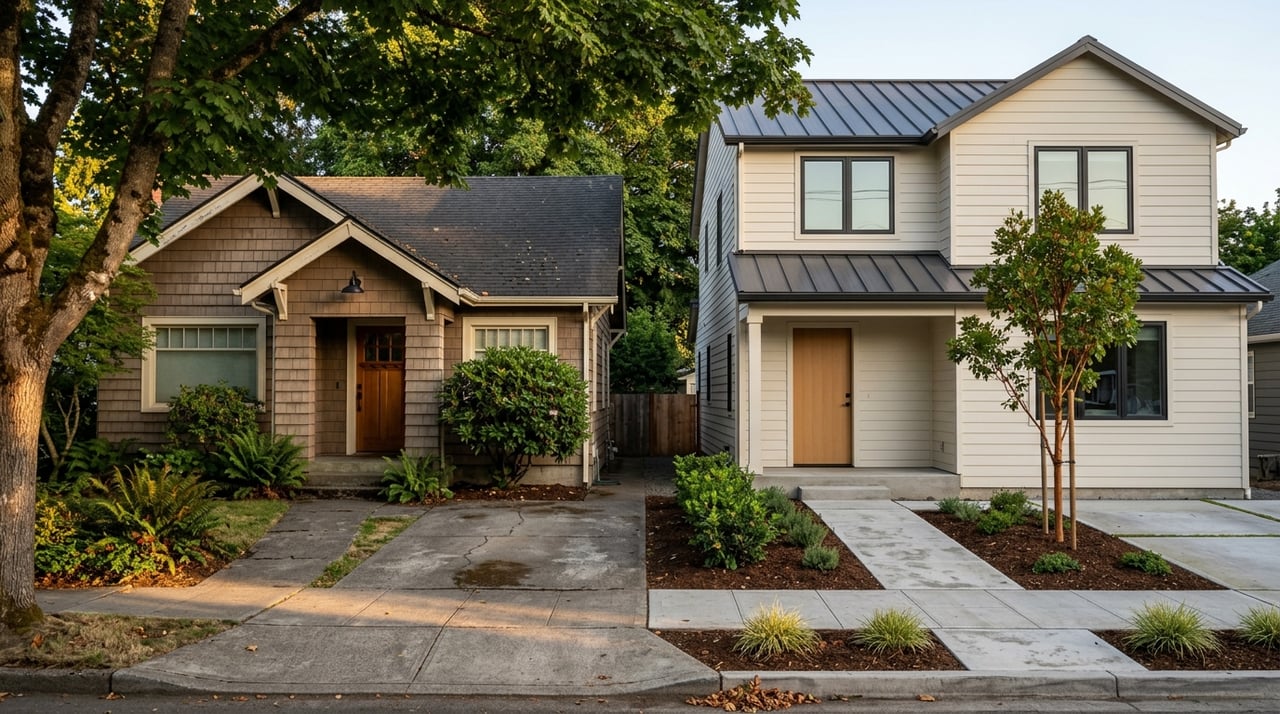
- Older Courtenay areas such as Old Orchard and Terminal Addition are known for heritage character, mature trees, and a more irregular street pattern, while newer areas such as Crown Isle reflect master-planned, phase-based development.
Which Courtenay areas are more walkable to daily services?
- Downtown-adjacent streets have the strongest official walkability support, with city planning highlighting walking connections to shops, parks, civic buildings, and cultural amenities around the downtown core.
Where are mature trees more common in Courtenay?
- Mature trees and established landscaping are more closely associated with older heritage-oriented streets near downtown, where city policy emphasizes tree and landscape protection.
Are newer Courtenay neighbourhoods still changing?
- Some are. The Ryan Road and Anderton Road area is identified as a future neighbourhood centre that will need a local area plan before approvals move ahead.
Is Crown Isle considered a newer Courtenay neighbourhood?
- Yes. Courtenay’s Official Community Plan describes Crown Isle as a master-planned community area that has been developing since the 1990s with residential and commercial components.
How should buyers compare Courtenay neighbourhoods?
- A practical way to compare them is to look at outdoor space, mature landscaping, walkability to services, and how much future development or change you are comfortable living near.