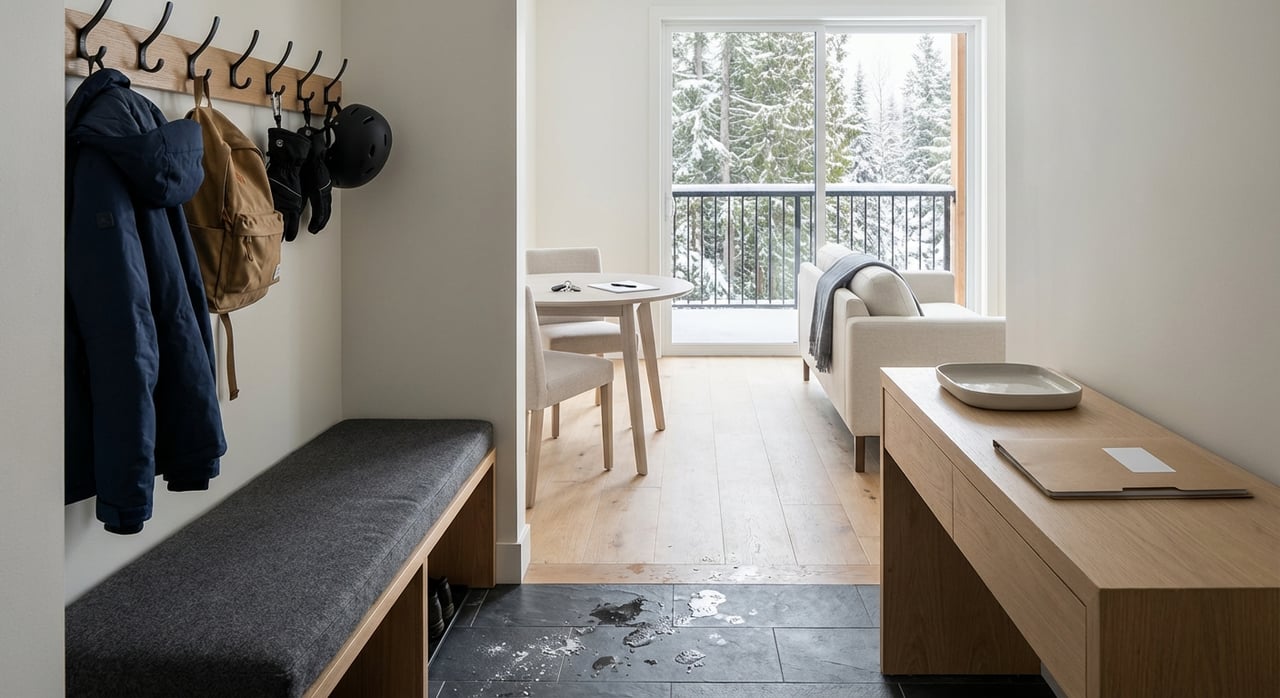
Ski all winter, bike and hike all summer, and still carve out your own getaway time. If you own or are considering a Mount Washington condo, you can turn it into a true four-season asset with a smart plan. You want reliable bookings, clear rules, and a place your family loves to use. In this guide, you’ll learn the essentials for year-round demand, short-term rental compliance, taxes, pricing, and day-to-day operations so your condo works for you in every season. Let’s dive in.
Why Mount Washington works year-round
Mount Washington Alpine Resort is built for winter and summer. In peak season you have downhill and nordic skiing, and in the warmer months the resort runs lift-access mountain biking, the Eagle’s Flight zipline, scenic chairlift rides, and alpine hiking. That multi-season activity mix extends demand well beyond ski weeks. You can explore the resort’s summer lineup on the official page for alpine summer activities at Mount Washington.
The setting also taps into nearby Strathcona Provincial Park. Trails and views draw hikers and photographers through the shoulders of spring and fall. When you plan with these patterns in mind, you can balance personal use with steady bookings.
Know the demand by season
Understanding when guests want to visit helps you price well and protect your own time in the condo.
- Winter peak: Weekends, school breaks, and holidays drive the highest demand and rates. Slope-side convenience and gear-friendly amenities matter most here.
- Summer lift season: Bike park weekends, zipline seekers, hikers, and scenic chairlift riders create a strong second season. Event weekends often book early.
- Shoulder months: Spring and fall see a mix of weekenders, hikers, and remote workers. Longer mid-week stays can fill gaps at lower rates.
For planning, use data plus real-world samples. A regional snapshot shows Comox-area short-term rentals with an average daily rate around CA$115 and occupancy near 58 percent, which is useful as a broad benchmark while you refine for your on-mountain unit type and seasonality (Comox market snapshot). Marketplace samples also show that one-bedroom village condos often list in the CA$150–$300 per night range depending on season and features, while larger chalets can exceed CA$350–$1,000 at peak times (Mount Washington vacation rentals on VRBO). Rates vary, so model several scenarios for your specific building, size, and amenities.
Build a pricing and calendar plan
A simple calendar strategy can lift revenue and still give you the weeks you want.
- Use a segmented plan. Set premium rates and multi-night minimums for winter holidays and school breaks. Price summer event weekends higher, then discount longer mid-week stays in shoulder months to raise occupancy.
- Refresh prices often. Dynamic pricing tools are standard in the industry and help you adjust to demand shifts. If you prefer manual updates, review rates weekly during peak seasons.
- Balance use and income. Block your favorite personal weeks early, then open the rest of the winter and key summer weekends for bookings. Add a clear lead time for your own reservations so you do not displace high-value stays.
- Test three revenue cases. Model conservative, expected, and upside results using seasonal ADR and occupancy ranges rather than a single flat average. Update your model each quarter as new data arrives.
Know the rules before you list
British Columbia now requires short-term rental hosts, platforms, and certain strata hotel platforms to register with the provincial Short-Term Rental Registry. You must display your provincial registration number on listings and meet all conditions. Start with the province’s page on short-term rental registration.
Many communities in B.C. have a principal-residence requirement, which limits short-term rentals to an owner’s primary home. Mountain-resort areas are different. Mount Washington is specifically listed among the ski and mountain resort exemptions in the provincial guidance, which means that principal-residence limits do not automatically apply in the resort area. Review the province’s principal-residence requirement and exemptions to confirm how it applies to your address.
Local zoning matters too. The Comox Valley Regional District adopted a zoning amendment that permits short-term rental accommodation services within the Mt. Washington Integrated Resort Community Plan Area. Outside that plan area, short-term rentals are generally limited unless you apply for a Temporary Use Permit or rezoning. Always confirm the exact parcel and current rules on the CVRD’s page for short-term rental accommodations.
Finally, strata corporations can set their own short-term rental bylaws. A 3/4 vote is required to adopt restrictions, and fines for breaches can be significant. Get the bylaws, recent minutes, and any rental-management agreements before you buy or list. The province explains this clearly here: short-term rental bylaws in strata housing.
Quick compliance checklist
- Confirm your unit is inside the Mt. Washington Integrated Resort Community Plan Area with CVRD planning.
- Obtain and read strata bylaws, minutes, and any building-level rental program rules.
- Register with the provincial STR Registry and display your number on every listing.
- Keep a local contact available for guest and emergency issues if required by your strata or registration.
Budget for taxes and fees
Short-term accommodation is a taxable supply in Canada. If your taxable revenue exceeds the $30,000 small-supplier threshold over 12 months, you must register for GST/HST. The Canada Revenue Agency also notes compliance expectations for platforms and warns that non-compliant operators risk losing tax deductions. Review the CRA’s guidance on the sharing economy and tax responsibilities and consult a tax professional.
In B.C., Provincial Sales Tax and the Municipal and Regional District Tax (MRDT) apply to accommodation in participating areas. The Mount Washington resort area participates in MRDT, so you should expect to collect MRDT along with PST where applicable. For an overview of PST on accommodation and MRDT participation, see the provincial bulletin on PST 120: Accommodation. Confirm current MRDT rates with Destination BC or the regional district.
Budget for building costs too. Sampled Mount Washington condo listings show typical strata fees in the CA$300–$700 per month range depending on building and unit size, plus property taxes, utilities, insurance, and cleaning or management costs. For current listing context, review local Mount Washington condo listings.
Insurance needs attention. Standard homeowner policies often exclude business activity. Ask your broker about a short-term rental endorsement or a policy designed for hosted stays, and confirm what your strata’s master policy covers versus what is your responsibility.
Operations that boost reviews
Your guest experience drives occupancy and repeat bookings. Keep it simple, reliable, and mountain-ready.
- House rules: Set clear policies for maximum guests, pets if allowed by your strata, noise, and parking. Publish these in your listing and your digital guide.
- Turnovers: Line up a dependable cleaner and a backup. Stock two full sets of linens and supplies so one set can be in laundry while the other is in use.
- Access: Install a smart lock with time-bound codes and clear check-in instructions. Provide luggage trolleys if your building allows them.
- Gear storage: Offer safe storage for skis and bikes. If you cannot add storage inside the unit, clarify the building’s storage area and rules in your guidebook.
- Support: List a local emergency contact and preferred vendors for basic maintenance. Fast response times protect your reviews and your unit.
If you prefer hands-off ownership, full-service managers typically handle guest communication, revenue management, cleaning, and reporting for a percentage of rental revenue. Across Canada, full-service fees commonly range from roughly 15 to 25 percent depending on scope. Build this into your net projections before you buy.
Balance personal use and income
You can enjoy your condo and maximize returns with a little structure.
- Pick your dates early. Block your family’s must-have weeks for spring skiing or summer hiking as soon as the resort publishes seasonal calendars.
- Protect high-value windows. Keep winter holidays, spring break, and major summer event weekends open for guests unless these are your top personal dates.
- Design for remote stays. Reliable high-speed internet and a modest workspace help fill shoulder-season calendars with longer mid-week bookings.
- Add review-friendly touches. A simple guidebook with resort tips, Strathcona trails, parking guidance, and local services helps guests plan and reduces questions.
Quick planning checklist
- Verify zoning: Is your address inside the Mt. Washington Integrated Resort Community Plan Area? Check with CVRD planning.
- Confirm eligibility: Read your strata bylaws and minutes. Ask whether the building is a strata hotel and whether any rental limits apply.
- Register and display: Complete provincial STR registration and place your number on every listing.
- Model revenue: Build conservative, expected, and upside scenarios using seasonal ADR and occupancy ranges informed by regional data and live listing samples.
- Choose operations: Decide on full-service management or a simple stack of cleaner, smart lock, and dynamic pricing.
- Prioritize amenities: Reliable internet, covered ski or bike storage, hot tub or sauna where allowed, and clear parking details can lift ADR and reviews.
When you pair a clear plan with local rules and a guest-first setup, a Mount Washington condo can be a comfortable family base and a steady four-season performer.
If you are weighing a purchase or planning a sale on the mountain, our family-led team is here to help you make a confident move. For local guidance on buildings, strata bylaws, and value in today’s market, reach out to the Jane Denham Real Estate Group. Start with a free home valuation or schedule a buyer consultation, and let’s map the right next step.
FAQs
What short-term rental rules apply to Mount Washington condos?
- British Columbia requires hosts to register with the provincial Short-Term Rental Registry and display the number on listings; Mount Washington is within a mountain-resort exemption for the principal-residence rule, but CVRD zoning and your strata’s bylaws still govern what is allowed.
Do I need to live in my Mount Washington condo to rent it short term?
- No, the province lists Mount Washington among mountain-resort areas that are exempt from the principal-residence requirement; confirm your exact address and always check strata bylaws.
What taxes apply to short stays at Mount Washington?
- Short-term accommodation is generally subject to GST if you exceed the small-supplier threshold, plus B.C. PST and the MRDT in participating areas; verify current MRDT rates and consult a tax professional.
How should I price a one-bedroom Mount Washington condo?
- Use a seasonal model: premium rates for winter holidays and school breaks, strong summer weekend pricing, and discounted shoulder-period mid-weeks; regional data and live marketplace samples suggest one-bedrooms often land around CA$150–$300 per night with wide variation by building and date.
Which amenities help my condo rent in all seasons?
- Reliable high-speed internet, covered ski and bike storage, a hot tub or sauna where allowed, clear parking details, and a simple guidebook with resort and trail information can boost reviews and ADR.