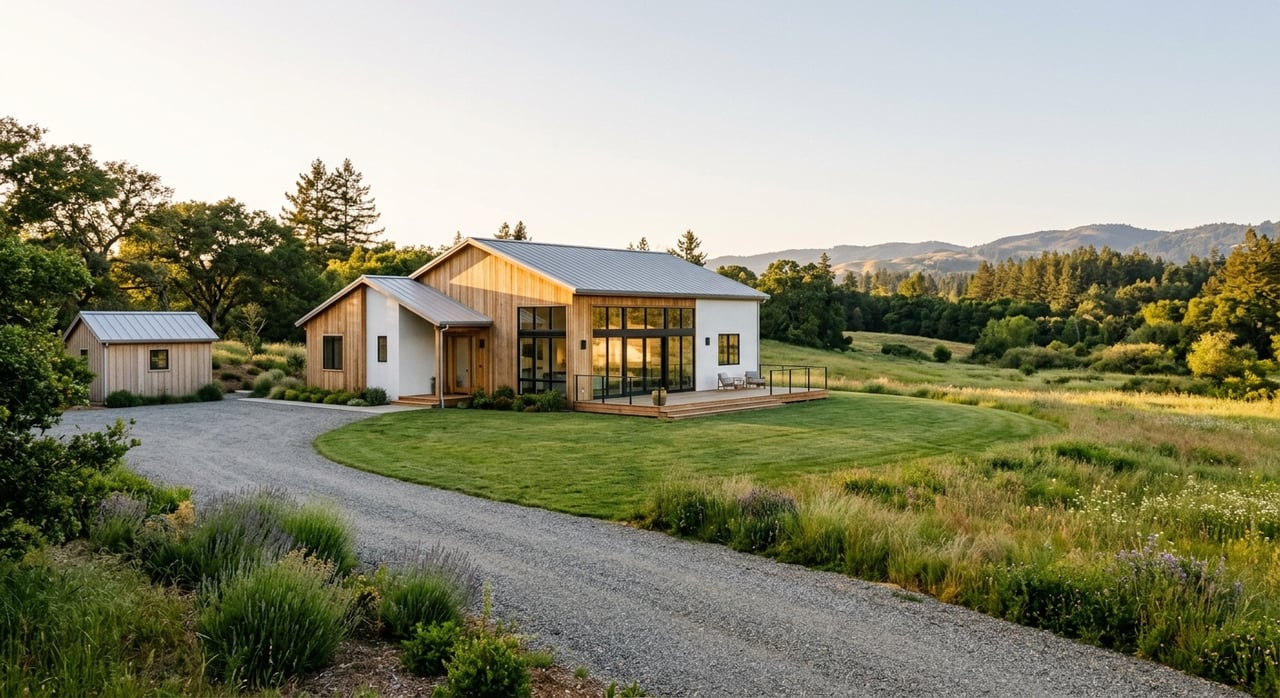
Dreaming of wide-open space in the Comox Valley? Buying acreage can give you room to breathe, garden, build out your lifestyle, and enjoy a quieter setting, but rural property comes with a different set of rules than a typical in-town home. If you are considering acreage near Comox or Courtenay, this guide will help you understand the key checks around zoning, ALR status, water, septic, fire protection, and daily living so you can move forward with more confidence. Let’s dive in.
Start With Legal Jurisdiction
One of the biggest mistakes acreage buyers make is assuming all rural properties follow the same rules. In the Comox Valley, they do not.
According to the Comox Valley Regional District zoning and land use page, CVRD Zoning Bylaw No. 520 applies to the three electoral areas, while Courtenay, Comox, and Cumberland each have their own zoning bylaws. That means your first step is to confirm whether the property is in a CVRD electoral area or inside a municipality before making plans for the land.
This matters even in places that are commonly described with broad local labels. For example, if a property is inside the City of Courtenay, city zoning applies rather than CVRD zoning, and recent residential zoning changes in Courtenay are a reminder that a neighborhood name alone is not enough to tell you what rules apply.
Know Where Rural Acreage Sits
Some of the most sought-after rural areas near Comox and Courtenay fall within Electoral Area B. The CVRD notes that Electoral Area B includes the Comox Peninsula, Little River, Balmoral Beach Area, Point Holmes, Bates Beach, Huband Road, and the Tsolum regions, all areas where acreage buyers often begin their search.
The CVRD Electoral Area B overview also notes that some rural areas do not have fire protection services. In other words, two properties that look similar online can offer very different service levels depending on the exact location.
In rural areas, land-use decisions are also shaped by the Regional Growth Strategy and the Rural Comox Valley Official Community Plan, both referenced by the CVRD. For you as a buyer, that often means more property-specific review than you would expect in a standard subdivision.
Understand ALR Before You Buy
If you are buying acreage, the Agricultural Land Reserve is one of the most important things to check. The ALR is a provincial land-use zone where agriculture is the priority use.
The Agricultural Land Commission says the ALR makes up about 5% of British Columbia’s land base. It also notes that normal farm and ranch practices, including noise, dust, and odours, are protected, so rural living can come with active agricultural activity nearby.
Just as important, ALR status is not something you should confirm from title notation alone. The ALC specifically advises buyers to verify ALR status parcel by parcel using provincial map tools or written confirmation, because title notation is not definitive.
ALR, Zoning, and Farm Status Are Different
Acreage buyers often use terms like rural, ALR, and farm status as if they mean the same thing. They do not.
A property can be rural and not be in the ALR. It can be in the ALR and not have farm classification. It may also have farm classification rules that affect taxes and assessments, but those are separate from local zoning and separate from ALR rules.
The ALC explains that in the ALR, permitted uses can include a principal residence, a secondary suite, and in some cases an additional residence, along with structures needed for farm use, but local government zoning still applies. BC Assessment also states that farm classification is voluntary and income-based, and it must be maintained over time.
If you are hoping to keep or obtain farm classification, it is worth understanding the deadlines and documentation requirements early. If you qualify under the province’s rules, there may also be a rural farm property tax extension, but farm class alone does not automatically qualify a property for that program.
Check Your Intended Use Early
Before you fall in love with a property, match your plans to the actual rules. That includes things like a suite, second dwelling, workshop, kennel, home occupation, agri-tourism idea, barn, or hobby farm setup.
The safest approach is to confirm the legal jurisdiction first, then zoning, then ALR status if applicable. The CVRD zoning tools can help you look up a property by civic address, PID, or roll number, which is especially helpful for acreage near municipal boundaries.
For outbuildings and farm structures, both the ALR and local zoning may matter. The ALC allows structures necessary for farm use in the ALR, but local zoning still controls practical standards like setbacks, lot coverage, and other development rules.
Water Supply Can Shape Your Plans
On acreage, water is a major due-diligence item. If the property relies on a private well, you will want to understand both the condition of the system and whether the water supply suits your plans.
The Province of British Columbia says domestic wells are regulated, and activities like construction, decommissioning, pump installation, disinfecting, and flow testing are generally restricted activities requiring qualified professionals under the Groundwater Protection Regulation. The province also encourages owners to test well water periodically and keep well identification information in good condition.
Well placement rules also matter for acreage layouts. The province says a new water-supply well must be at least 15 metres from an existing water-supply well, and wells must also be set back at least 30 metres from possible contamination sources. If you are thinking ahead about a garden, barn, septic field, or additional structures, those spacing requirements can affect what is practical.
Domestic Water Use Has Limits
Many buyers picture orchards, large gardens, animals, or hobby farming. Those goals can be realistic, but they are not all treated the same under provincial water rules.
BC notes in its Before You Drill brochure that domestic groundwater use for a private dwelling, fire prevention, private lawn and garden watering up to 1,000 square metres, and domestic animals or poultry kept as pets does not require a water licence. Non-domestic uses do require licensing.
That means a country lifestyle may come with real operating limits. If your plans go beyond basic household use and a modest garden, it is smart to confirm whether the property can support the demand and whether additional approvals may be needed.
Septic Deserves Close Review
Septic is just as important as water, and often just as easy to overlook. In rural Comox Valley, many properties depend on onsite sewage systems rather than municipal sewer.
Under BC’s Sewerage System Regulation, the property owner is responsible for proper maintenance and safe operation. The province also requires records to be kept, and the CVRD states there are approximately 9,000 septic systems in use in the electoral areas.
When reviewing a property, ask for the septic permit, maintenance history, pump-out records, repair information, and the known location of the septic field. These details can help you better understand capacity, age, and whether the system has been looked after.
The CVRD septic information page also identifies higher-risk septic areas, including Royston/Gartley/Kilmarnock, Union Bay, Ships Point, and parts of Hornby Island, where factors such as density, private wells, and environmental sensitivity can increase concern. Even if your target property is outside those areas, septic review should still be part of your purchase planning.
Regional Water and Fire Protection Vary
Rural service levels are not uniform across the Comox Valley. Some properties can connect to regional water, while others rely on private systems.
The CVRD says properties within the Black Creek-Oyster Bay, Royston, Union Bay, and Denman Island water local service areas, or within Comox Valley Water System boundaries, may be eligible to connect to the regional system. According to the CVRD water service application page, if a water main extension is required, the applicant pays the cost and the engineered design must be approved by the CVRD.
Fire protection also varies by location. The CVRD fire services page notes that some rural areas have no fire protection services at all, while in Electoral Area B, designated fire protection areas include Bates-Huband and Greater Merville. If you are buying a wooded or edge-of-forest property, it is wise to confirm the exact service area and think through FireSmart planning as part of your ownership costs and risk management.
School Catchment and Transportation Matter
If you are moving with children, acreage living can affect daily logistics more than you might expect. Catchment and bus service should be confirmed early, not after subject removal.
Comox Valley Schools states that every school has a catchment boundary, and its school catchment update page directs families to use the district school locator to identify the assigned catchment school. The district also notes updated catchment maps for several elementary schools for the 2025-2026 school year.
Transportation is another practical piece. The district notes walk limits of 1.6 km for elementary students and 4.0 km for secondary students under its busing provisions, so a rural address can change how your day-to-day schedule works.
A Simple Acreage Due-Diligence Checklist
If you want a practical way to review a rural property, start here:
- Confirm whether the parcel is in a CVRD electoral area or inside a municipality
- Verify zoning using the correct local planning tool
- Check whether the property is in the ALR
- Confirm whether your intended use is permitted, including suites, second dwellings, barns, workshops, or hobby farm activities
- Request the well record and recent water-quality test results
- Ask for septic permits, maintenance history, pump-out records, and repair details
- Find out whether the property is on regional water or relies on a private well
- Confirm whether the area has fire protection service
- Review school catchment and transportation options if that applies to your household
Why Local Guidance Helps
Buying acreage is rarely just about the house. You are also buying the land, the services, the rules, and the practical realities that come with rural living.
That is why local insight matters so much in the Comox Valley. A property that looks perfect in photos may come with restrictions or service limitations that affect your plans, while another property may offer more flexibility than you first expected.
If you are exploring acreage in the Comox Valley and want a local, relationship-first team to help you evaluate the details, connect with Jane Denham Real Estate Group. You will get thoughtful guidance grounded in the realities of this market, so you can search with clarity and move forward with confidence.
FAQs
How do you check if a Comox Valley acreage is in the ALR?
- Use the province’s ALR map tools or get written confirmation from the Agricultural Land Commission, because title notation is not considered a definitive way to confirm ALR status.
Can you add a suite or second dwelling on rural Comox Valley acreage?
- It depends on the property’s legal jurisdiction, local zoning, and whether the parcel is in the ALR, since both local bylaws and ALC rules may apply.
What should you ask for when buying acreage with a well?
- Ask for the well record, recent water-quality test results, and any available information on pump work, flow testing, and ongoing maintenance.
What septic information should you review before buying rural acreage?
- Request the septic permit, pump-out and maintenance history, repair records, and the known location of the septic field, since owners are responsible for proper maintenance and operation.
Can rural Comox Valley acreage connect to regional water?
- Some properties may be eligible if they are within certain local service areas or Comox Valley Water System boundaries, but extensions can require applicant-paid costs and CVRD approval.
Does every rural Comox Valley acreage have fire protection service?
- No, the CVRD states that some rural areas do not have fire protection services, so you should confirm the exact service area for the property you are considering.
How do you confirm school catchment for a rural Comox Valley property?
- Use the Comox Valley Schools district school locator and verify current catchment boundaries early, especially since some school maps have been updated for 2025-2026.