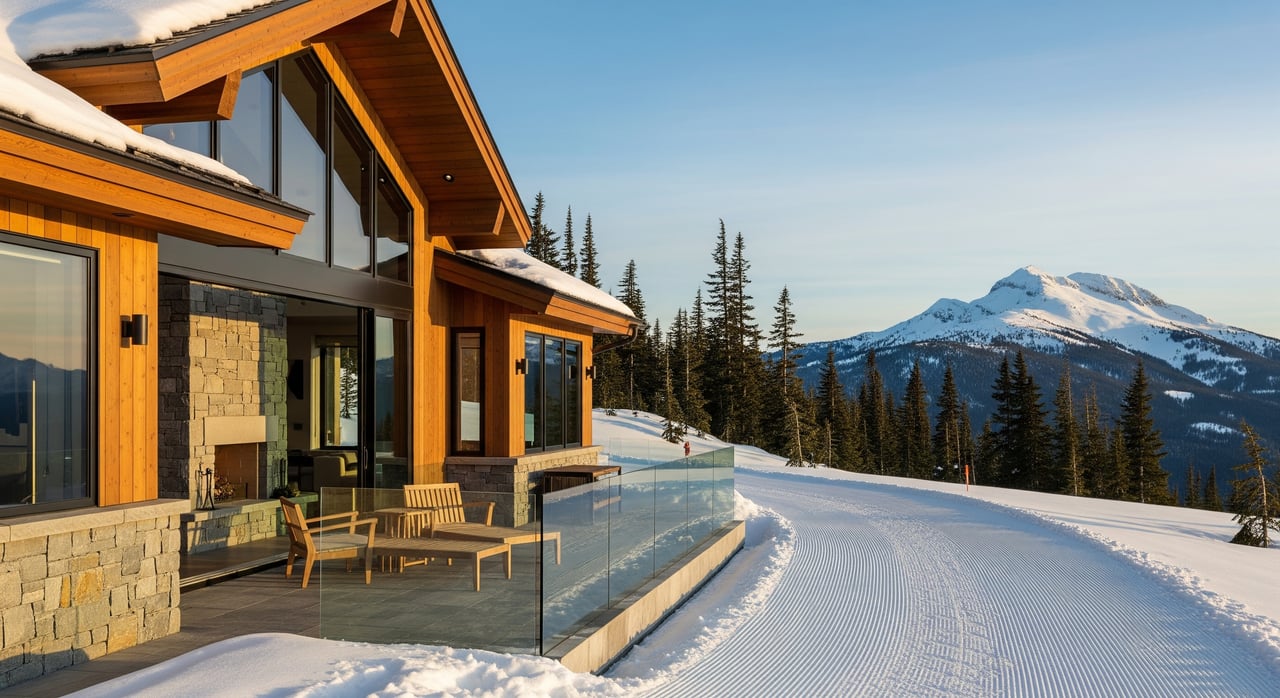
Imagine clicking into your skis at your front door and gliding to the lift a few minutes later. If a slope-side home on Mount Washington is on your wish list, you likely want easy access, smart ownership costs, and the option to earn rental income. This guide gives you clear steps to evaluate ski-in/ski-out properties, understand strata rules, and prioritize what matters for day-to-day mountain living. Let’s dive in.
What ski-in/ski-out means here
“Ski-in/ski-out” is a marketing description, not a legal standard. On Mount Washington, the details can vary building by building and street by street.
- Ski-out means you can put on skis at or very close to your door and reach a lift or groomed run without a long walk or using roads.
- Ski-in means you can ski back to the property or to nearby common property at day’s end.
- Ski-adjacent or near-slope often means a short walk, a groomed path, or crossing a road before you reach snow.
For any listing, verify the exact route and whether it relies on shared pathways, easements, or community trails. Ask for a map of the access, any registered rights-of-way, and confirmation that the access is transferrable with title.
Property types and access tradeoffs
Mount Washington offers a mix of resort condos, townhomes, detached chalets, and rural cabin lots. Your preferred balance of convenience, privacy, and maintenance will guide your choice.
- Condominiums and strata units. Typically closest to lifts and on-mountain services. Expect shared amenities like ski lockers, boot rooms, and elevators. Lower exterior maintenance makes these popular for second-home owners who want simple, reliable access.
- Townhouses or row chalets. Multi-level layouts with more private entries. Many stratas handle exterior work, so you get a home-like feel with lighter upkeep.
- Detached chalets and cabins. Standalone homes on private lots. Some truly back onto runs, while others are a short traverse away. You gain space and privacy, but you take on more maintenance and snow management.
- Rural or mountain lots. Larger parcels with private cabins. Access may be by road or a short ski traverse. These often require the most hands-on approach to utilities, winterization, and snow removal.
When comparing options, think about elevation, slope orientation, and proximity to groomed terrain. A straight-line map view can be misleading if trees, cliffs, or streams interrupt a clean ski line.
Seasonality on the mountain
Season length and snowpack vary year to year. The resort primarily operates through winter and early spring, with peak demand during holidays and weekends from Christmas through March. Weather shifts affect not only lift operations but also road access, maintenance needs, and utility costs.
- Access and safety. Icy or blocked roads may require winter tires, 4WD or AWD, and chains in tough conditions. Plan for occasional delays.
- Maintenance and wear. Snow loads, de-icing, and freeze-thaw cycles impact roofs, gutters, and decks. Heating systems work harder at elevation, so preventive service matters.
- Hazard awareness. Avalanche mitigation occurs around ski runs, but properties off groomed terrain can have different exposures. For any remote or steep lot, review hazard information and consult local authorities when needed.
Strata essentials for resort buyers
Strata governance has a big impact on daily use, costs, and rental potential. Get the full picture before you write an offer.
- Documents to request: strata plan, bylaws and rules, minutes for the last 12 to 24 months, annual budget and recent financials, depreciation report, and current insurance certificate. Ask for records of any legal actions or building envelope issues.
- Short-term rentals: some stratas restrict or manage rentals with minimum stays, registration, or outright prohibition. These rules shape your income strategy.
- Insurance and deductibles: mountain buildings often carry higher premiums and deductibles due to snow and freeze risk. Higher deductibles can lead to larger special assessments after claims.
- Parking and storage: confirm assigned stalls, guest parking policies, enforcement, and the location of ski lockers or storage rooms. Visitor parking is tight during peak weekends.
- Snow removal and access: clarify who clears roads, driveways, and rooftop snow. Confirm what your strata fees include and what is billed separately.
Short-term rental rules and income potential
If you plan to rent, verify the bylaws first. Peak winter weeks and holidays usually command the highest nightly rates. Shoulder seasons can soften unless summer activities like hiking and biking are strong enough to support occupancy. Build in the operational costs of cleaning, linens, check-in support, and possibly a property manager. Conservative projections help you avoid surprises.
Practical logistics that matter
The right floor plan and the right systems make winter stays smooth and enjoyable.
- Parking and vehicle access. Many units include one stall. Extra stalls and visitor spots can be limited, especially on peak weekends. Confirm stall dimensions and location in advance.
- Storage and ski gear. Look for heated ski lockers, boot dryers, and laundry capacity to handle wet gear. Good ventilation reduces moisture buildup inside the unit.
- Heating, water, and utilities. Understand the system type and age. Electric baseboard, radiant in-floor, forced air, and wood or propane each carry different costs and maintenance routines. Ask for recent utility bills when available.
- Building services and amenities. On-site concierge or rental desks add convenience and can support stronger rental performance, but they come with higher strata fees. Ask about shuttle options that connect neighborhoods to the base area.
Viewing and inspection checklist for winter
You learn the most when you see a property in real mountain conditions. If you are buying from out of town, ask for winter photos and videos of the approach, driveway, and roofline after a snowfall.
- Pre-showing preparation:
- Request bylaws, minutes, depreciation report, insurance details, and recent utility bills.
- Confirm parking stall location, storage locker numbers, and access instructions.
- Ask for a route map showing ski-in and ski-out paths plus any easements.
- On-site walkthrough:
- Access and approach. Drive the route in similar weather if possible. Note steep sections, tight turns, and where ice tends to linger.
- Entry and exterior. Check stairs, walkways, and handrails for anti-slip measures. Look for ice damming signs, heat trace, gutters, and drainage during melt periods.
- Building envelope. Watch for stains that signal past leaks and inspect window seals for fogging or condensation.
- Mechanical systems. Confirm heating type, age, and service records. Inspect hot water location and pipe insulation. Verify ventilation and humidity control.
- Amenities. Locate ski lockers, boot rooms, drying rooms, and laundry. Consider hot water capacity during full occupancy.
- Safety. Review emergency exits and signage. For remote or steep sites, consider slope stability features.
- Noise and light. Note proximity to lifts, grooming operations, or night lighting that could affect sleep.
- Technical inspections to order:
- General home inspection with a focus on roof load, insulation, and HVAC.
- Building envelope specialist for older strata buildings or if you see moisture red flags.
- Geotechnical or hazard assessment for remote or steep parcels when appropriate.
- Plumbing review for freeze risk and winterization.
Due diligence before you write an offer
Gather documentation early so you can move quickly when the right home appears.
- Key documents:
- Title search plus all registered easements, covenants, and rights-of-way tied to ski access.
- Strata plan, bylaws, rules, minutes for 12 to 24 months, annual budget, depreciation report.
- Strata insurance certificate with deductible details and per-unit limits.
- Contracts for snow removal, private road maintenance, and access agreements.
- Rental history and management contracts if the unit has been rented.
- Utility bills for the last 12 months and recent property tax notices.
- Permits and warranties for recent construction or renovations.
- Questions to ask:
- Are there any pending special levies or major repairs expected soon?
- What are the short-term rental rules and how are they enforced?
- Who clears roads, driveways, and roofs, and what are typical response times?
- How is parking enforced and are extra stalls available to rent or buy?
- Have there been insurance claims related to water ingress, roof failure, or freeze damage?
- What do average annual strata fees cover and what is billed separately?
- Advisors to consult:
- A local real estate agent experienced with Mount Washington properties.
- A real estate lawyer with strata experience in British Columbia.
- A chartered home inspector and specialists as needed.
- A local property manager for rental projections and operating costs.
- An accountant or tax advisor for rental income and property tax planning.
How to balance personal use and rental goals
A clear plan helps you get both time on snow and the income you want.
- Set your calendar first. Block your must-ski weeks, then release prime dates you are willing to rent. Holidays and peak weekends often make the biggest revenue difference.
- Price for seasonality. Expect stronger demand in winter and plan for softer shoulder seasons unless you lean into summer activities and events.
- Budget for operations. Cleaning, linens, supplies, and manager fees add up. Compare self-management to a full-service property manager so you understand the tradeoffs.
- Model conservatively. Use realistic occupancy and nightly rates and leave a buffer for variable snow years.
Next steps with local guidance
A great ski home should simplify your time on the mountain and stand up to the realities of winter. With Mount Washington’s mix of strata rules, snow management needs, and access nuances, local insight makes a real difference. Our family-led team combines decades of Comox Valley experience with a service-first approach to help you choose with confidence, whether you want a lock-and-leave condo, a townhome with gear space, or a slope-side chalet.
If you are exploring properties on Mount Washington or in the surrounding Comox Valley communities, reach out to the Jane Denham Real Estate Group for tailored guidance and a smooth buying process.
FAQs
How do I verify a ski-in/ski-out claim on Mount Washington?
- Ask for a map of ski access, any registered easements or rights-of-way, and winter photos or videos. Then walk or ski the route in season to confirm.
What should I know about strata rules for short-term rentals?
- Get the bylaws and recent minutes. Look for minimum stays, registration requirements, or prohibitions that directly affect rental income potential.
How many parking stalls do most units include?
- Many ski-focused strata units include one assigned stall, with visitor parking limited on peak weekends. Confirm stall location and size in writing.
What operating costs are higher on the mountain?
- Heating, snow removal, and insurance deductibles can be higher due to climate and location. Review utility bills, strata budgets, and insurance details.
What inspections are most important in winter conditions?
- A home inspection that focuses on roof load, insulation, HVAC, and moisture control, plus envelope or geotechnical reviews where conditions warrant.
Can lenders treat resort properties differently?
- Yes. Some lenders apply different terms for secondary or rental properties. Verify financing early and confirm how rental use may affect your mortgage.